40 entries23 cashiers read22 licences from registersPolski
A register of crypto cashiers · updated 25 September 2026
Bitcoin casinos in Poland — 40 cashiers checked against documents
The best crypto casino for a player in Poland in 2026 is not picked from the headline
on an offer. It is picked from four things written down before the deposit: the licence
number in the regulator's register, the clause of the terms that governs verification,
the list of coins in the cashier, and the date all of that was read. This register
gathers those four things for forty brands reachable from Poland and shows, beside each
one, exactly what was read and what was not.
40 cashiers with logo and description22 licences from a register10 written-out reviews27 coins counted3 clauses carrying a figure
Every figure here is counted from the entries and can be recounted: the register holds 40 entries, 7 of them name a clause of the terms, and 23 cashiers were opened from this desk. Where each figure comes from is set out on the method page.
01
Bitcoin casinos in Poland — what is in this register
Forty brands, one measure, every field with the date it was read
This page is a register, not an inducement. It gathers the forty brands a Polish player
runs into when searching for bitcoin casinos in Poland, and records the same things
beside each of them: where the licence number came from, which clause of the terms governs
verification, which coins the cashier really takes, and when those three things were read. If
something could not be read, the table says it could not be read — an empty field does not
turn into a carefully hedged sentence that sounds like knowledge.
What separates this comparison from most of the lists that come up for
best bitcoin casinos in Poland sits in a single distinction. A licence number can be
found in the regulator's own search together with the status of the entry and the name of the
company — or a jurisdiction the operator states about itself can be copied off somebody else's
list. Those are two entirely different things, and on this page they carry two different
labels: register and declared. Of forty brands, 22 carry the
first label and 18 the second.
Of the forty brands in this comparison, 22 carry a licence number found in the regulator's own search together with the status of the entry and the company named in it, while 18 carry only a jurisdiction declared by the operator. The label beside every entry says which of the two it is.
The second difference is simpler still, and concerns something that is missing. There is
not one withdrawal time. No “paid out in ten minutes”, no “fastest cashier in Poland”.
Measuring a withdrawal time means depositing your own money, losing or winning it, filing a
request and counting the hours with a watch in your hand. Nobody here has done that, so the
column stands empty and will stand empty until somebody does. A list that gives such times
without measuring them has copied them from the operator's own material, or from another list
that did the same a year earlier.
Who an online bitcoin casino in Poland is for
A bitcoin casino for Polish players is, in practice, a cashier whose balance is
kept in crypto rather than in złoty. There is one consequence, and it shows up at the first
deposit: a złoty does not enter such a cashier directly. It goes first to an exchange or a
crypto bureau, turns there into bitcoin or into a fixed-value coin, and only then travels on.
Everything else — slots, tables, betting — looks exactly as it does anywhere else. The
difference sits in the cashier and nowhere else.
That decides who a crypto casino in Poland makes any sense for. It makes sense
for someone who already holds an exchange account and knows how to work it, because then the
extra step costs two minutes. It makes no sense for someone opening a wallet for the first
time in their life in order to play: to the risk of the game is then added a second, entirely
separate risk — a mistake in the transfer network, with no appeal from it, and with nothing to
do with the casino.
It makes sense if an exchange account already exists and has been verified.
It makes sense if the deposit and the withdrawal are meant to run the same road — and
with złoty rails they do not: BLIK and paysafecard run one way only.
It makes no sense if the wallet is being opened for this one occasion alone.
It makes no sense if the amount is small enough that the network fee and the rate will
eat a noticeable part of it — and at a few dozen złoty they will.
40brands in the registereverything that was gathered
22numbers from a registerstatus and company read
23cashiers openedcoin list read in the cashier
4calculable bonusesall three figures together
3clauses with a figurea money threshold or a deadline
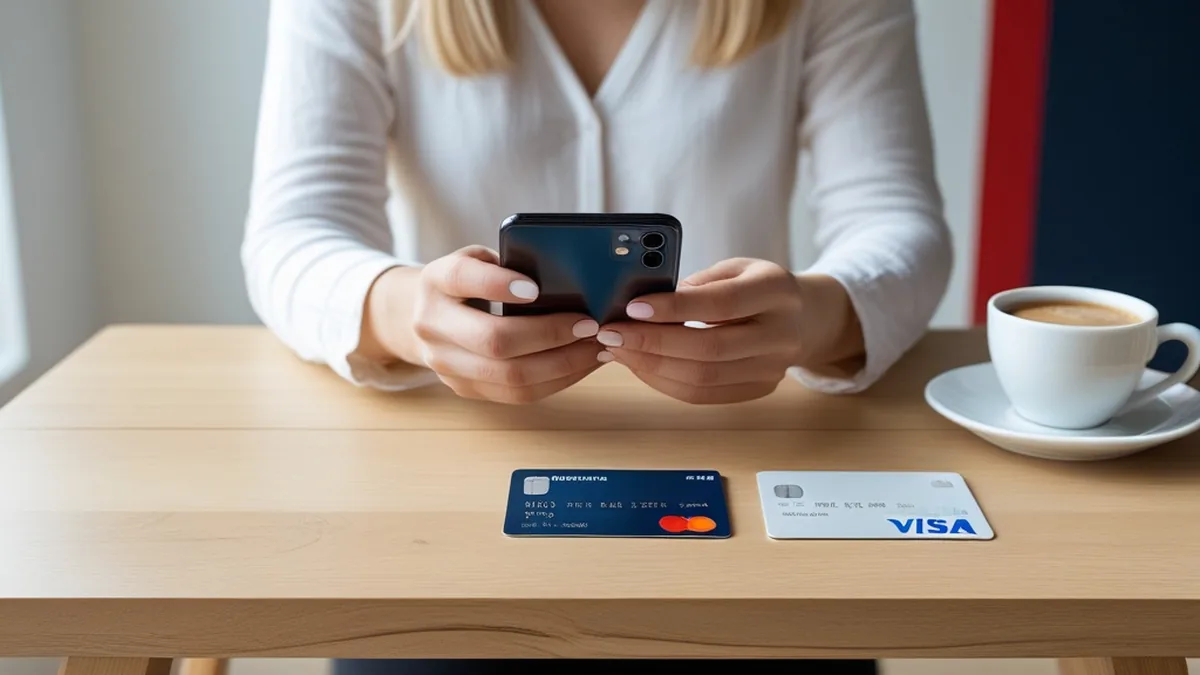
An illustration generated for this page. It is not a photograph of any casino or any player
— it shows the situation in which most of the searches described below begin.Four sieves the forty brands pass through. Every narrowing has a reason: no number in a register, a cashier that would not open, incomplete bonus figures. After the last one a handful of entries remain about which everything can be calculated.
The funnel above shows how quickly the number of entries shrinks once you ask for
something solid. Forty brands is everything that was gathered. 22 carry a
number found at the regulator. 23 showed a coin list in the cashier. Only
4 publish the full set of three figures the wagering sum needs. And the last
bar is the most important one in this register: it shows where knowledge ends and copying
begins.
02
The best bitcoin casinos in Poland — the top of the register
Ten entries with the most fields read
The order below is not an order of “the best” in the everyday sense. It follows the Exit
Card — the measure set out further down — which counts how much of the road out is written
down before anyone deposits a first złoty. A casino can run an honest game and score four out
of ten here; that means it publishes little, not that it behaves badly. The reverse holds too:
a high position speaks about the clarity of documents, not about luck at a slot.
An illustration generated for this page. The lettering visible on the laptop screen is the
generator's own invention and means nothing; the frame shows no particular game and no
particular casino.
The one entry in this register where the licence number, the status of the entry, the name of the company and the contents of the cashier were all read on the same day.
Figure in the clauseClause 8.76 coinsRead 2 September 2026
The highest percentage in the whole comparison and, at the same time, the dearest wagering, because the multiplier runs on the deposit together with the bonus.
Clause without a figureClause 5.2 i 8.39 coinsRead 2 September 2026
The only cashier in the forty that answers in Polish and carries the złoty on its list of account currencies — checked against the /pl/ address and against the currency list in the cashier.
Clause without a figureClause 4.16 coinsRead 2 September 2026Site in Polish
The register entry is legible and the cashier is wide, but the reading dates from the middle of August rather than September — which is why this card loses a point that the more recently read entries keep.
Clause without a figureClause 12.58 coinsRead 14 August 2026
Ten entries with the full material. The other thirty are in the list below and in the
full register.
The first position in this comparison, Vave, stands there for a
reason anyone can check in a few minutes: the licence number typed into the regulator's search
returns an entry with a status and a company name, the terms name a clause on verification
together with a deadline in days, and the cashier opened from this desk shows its coin list.
10 points out of 10 is not a verdict on entertainment — it is a count of
fields that could be read.
The top of the register answers the question “which bitcoin casino in Poland do
people open most often” only in part: it answers the question of which entry the most could be
written about, and that is not the same thing. The full list below also shows the ones with few
fields — and it is precisely that part of a comparison which usually ends up nowhere.
03
A list of 40 crypto casinos reachable from Poland
The full comparison, with a source label on every entry
Below are all forty brands, in the same order as above, with a logo, one paragraph of
description and a label saying where the licence number came from. The descriptions are short
on purpose: they say how a brand differs from its neighbour in the table, not how many games it
has, because the number of games is the one thing every operator states about itself and nobody
counts independently.
The one entry in this register where the licence number, the status of the entry, the name of the company and the contents of the cashier were all read on the same day. The welcome package is spread over four deposits, and the wagering multiplier runs on the bonus alone rather than on the deposit plus bonus — the cheaper of the two bases, and the rarer one.
The highest percentage in the whole comparison and, at the same time, the dearest wagering, because the multiplier runs on the deposit together with the bonus. The same verification rule is written into two separate clauses of the terms, which is worth knowing before anyone goes looking for one.
The only cashier in the forty that answers in Polish and carries the złoty on its list of account currencies — checked against the /pl/ address and against the currency list in the cashier. It also carries a coin of its own in the basket, which happens twice in this comparison.
15 coins in the cashier — the widest list in this forty, and three of them hold a fixed value. Its licence carries the most recent date of any read here; the domain, however, is older than the brand, which the registration date shows.
10 coins, and two of them — Dash and Monero — appear almost nowhere else in this register. The cashier is built around dice with a result-checking mechanism of its own, rather than around a slot catalogue bought in from studios.
The verification clause names players paying in bitcoin outright and asks for a document before the first bet rather than before a withdrawal. Written that plainly, it is a rarity, and for anyone choosing a cashier with bitcoin in mind it is the most important sentence in the terms.
14 coins and a set of simple in-house games instead of a catalogue bought in from studios. One of the few entries where meme coins stand beside bitcoin.
The register entry is legible and the cashier is wide, but the reading dates from the middle of August rather than September — which is why this card loses a point that the more recently read entries keep. The clause separates age confirmation from the identity check, which few sets of terms bother to do.
The only entry in this register built around poker at a table with other players rather than around a game against a program. That is a different kind of risk and a different kind of verification: at a table, who sits beside you counts too.
The narrowest cashier read in the whole comparison — 3 coins. One of them holds a fixed value, which in practice counts for more than the other two together.
13 coins, and the first two on the list hold a fixed value — an unusual arrangement, because most cashiers open with bitcoin. The status of the register entry is not given.
12 coins, three of them fixed in value. The licence number belongs to the old Curaçao series — the kind that does not carry over to the new register automatically.
10 coins with litecoin at the head of the list, which is the exception here — the rest of the comparison opens with bitcoin. The licence number belongs to the old series.
A very wide catalogue built around in-house games — crash, mines, plinko, dice — beside a full floor of slots. The licence number was not checked in any register.
One of 3 entries that give the verification threshold as an actual amount — €2,500 or the equivalent in crypto. The cashier would not open from this desk, so the coin list stays empty rather than guessed.
The verification threshold here depends on the total of deposits paid in rather than on the withdrawal being asked for — a completely different rule from the two other entries that put an amount on it.
A long-standing brand with a recent entry in the register — the company Dama N.V. runs several other addresses in the same family. Everything to do with the cashier and with verification thresholds remains unread here.
A cashier promoting on-chain records of bets and a token of its own. The on-chain record covers transaction history, not the outcome of each spin — two different things.
The largest brand in this corner of the market and the reference point for everything else: a set of in-house games, a full slot catalogue and betting on one balance. The licence number was not checked in any register.
A cashier built around esports betting, with a casino added beside it. For someone arriving for esports rather than for slots, that is a different category from the rest of the list.
A brand promoting offers with no wagering requirement — which is exactly the kind of promise most worth checking in the terms rather than on the poster.
The label register means the licence number was found in the regulator's own search.
The label declared means the jurisdiction comes from the operator itself and was never
checked. Both are permitted in this comparison — what is not permitted is confusing one for
the other.
It is worth noticing what is absent from this list: there is no column of countries a
brand operates in, and no column headed “availability”. Columns like that look like hard fact
and are in reality copied from terms that operators change without notice; they go stale faster
than anything else on a page. If something was not read today, it is better for it to be absent
than untrue.
Forty entries is the whole reach of this register. It is not a list of “all the
bitcoin casinos in Poland”, because no such list exists — there are brands licensed
elsewhere that a złoty somehow reaches. The difference is not a lawyer's: it decides who a
complaint would be addressed to.
04
The Exit Card — what the number beside every entry is made of
Five fields worth two points each, ten in all
Every entry carries a number from zero to ten. The scale is short on purpose. A
two-figure score with a decimal — “8.7 out of 10” — implies a measurement of a precision nobody
in this field achieves, and is usually a device for keeping two brands from coming out
identical. Here they do come out identical when the material read about them is identical, and
nobody minds.
Field
Points
What has to be read to award both points
Register
2
Licence number found in the regulator's register, status of the entry and the company named in it.
Clause
2
The clause of the terms that governs verification, and whether a figure sits inside it.
Wagering
2
Percentage, multiplier and the base the multiplier runs on — the full set that makes a sum possible.
Cashier
2
Cashier opened from this desk, with a fixed-value coin on the list.
Reading
2
When these fields were read. A reading six months old is not a reading.
The “Reading” field measures this page, not the operator. A comparison that judges somebody
else's terms while saying nothing about when it read them is judging from memory.
The five fields of the Exit Card and how many of the forty entries score both points in each. The biggest hole is wagering: the three figures the sum needs are published by a handful of operators; the rest give the percentage alone.
The drawing above shows where the holes are. The biggest is in the wagering field: both
points require three figures at once — the bonus percentage, the multiplier, and the base the
multiplier runs on — and the base is published by a handful of operators. The line “100% bonus,
40× wagering” looks like a full set and is not one: without the base there is no saying whether
five thousand has to be turned over or ten.
What the Exit Card does not measure
The quality of the games. Twenty thousand titles and two thousand titles get the same
number of points. The catalogue is the same list from the same few suppliers everywhere.
The speed of a withdrawal. No point can be awarded for it, because it was not measured.
Customer support. Judging a chat window after one conversation is an anecdote, not a
measure.
The fairness of a game. That is not measured by looking at a page; it is measured by a
laboratory certificate, and the certificate belongs to the supplier of the game, not to the
casino.
The number beside an entry is the only number on this page anyone can reproduce on their
own. A ranking of bitcoin casinos in Poland with no measure given is an order somebody
chose; here the order follows from ten fields, and every one of them carries a date.
05
The best bonuses at bitcoin casinos for players in Poland
10 offers broken into figures that can actually be calculated
A welcome bonus at a crypto casino is described on the operator's page in one
line, and that line almost never contains the piece of information that decides everything. The
table below breaks the offers into parts: percentage, upper cap, free spins, wagering
multiplier and — most important — the base that multiplier is counted on.
The last column is the result of a sum from a 500 zł deposit, not a hint about how much to
pay in. “Cannot be calculated” means exactly that: one of the three figures is missing.
Two conclusions from this table are worth more than everything else on it. First: at the
same percentage and the same multiplier, an offer with the base “deposit + bonus” is twice as
dear as one with the base “the bonus alone”. Second: of 40 brands in the register only
4 publish the full set that makes the sum possible. The rest give a percentage
and a multiplier and leave the base in the terms, or do not give it at all.
Two bonuses described identically — one hundred per cent, forty times the turnover — differ by a factor of two, because the multiplier runs once on the credit alone and once on the credit together with the deposit. The base is the one figure of the three that almost nobody prints in the headline.
How to read a bonus offer in three minutes
01
Find the percentage and the capThe percentage says how much credit the cashier adds. The
cap says where that percentage stops working. “200% up to 1,000 zł” on an 800 zł deposit
gives 1,000 zł of bonus, not 1,600 zł.
02
Find the wagering multiplierUsually written as “40×” or “wagering 40x”. On its own it
still means nothing.
03
Find the multiplier baseThis is the step people skip. Look in the bonus terms for the
words “bonus amount” or “deposit + bonus”. The difference is twofold.
04
Check the stake limit during wageringMany sets of terms cap a single bet while wagering
is being cleared. Going over the cap can be grounds for cancelling the bonus.
05
Check which games count towards wageringSlots usually count in full, tables at ten per
cent or not at all. Turnover cleared at roulette can count ten times slower than the
headline suggests.
06
Check the deadlineWagering has a time window. Once it passes, the credit and everything
grown from it disappears — and that is the commonest reason a bonus “vanishes”.
No entry in this register carries a bonus percentage beside its name. In lists of
best bitcoin casinos in Poland the percentage is set in large type and the condition in
small — and the condition is the offer.
06
Bonus wagering — the only calculation on this page
The same stake, two bases, twice the difference
Wagering is the amount that has to be staked in games before a bonus, and whatever grew
out of it, can be withdrawn. It is not a fee or a charge — it is a condition. The sum needs
three figures and is simple enough to do in your head, provided all three are known.
01
Deposit — 500 złthe worked example of this page, not a suggestion
02
Bonus at 150% — 750 złthe credit that lands in the account
03
Base: the bonus alone — 750 złthe cheaper base: the deposit stays out of the sum
04
Multiplier 50× — 37,500 złthe turnover required before anything can leave
Above is that same sum written out on the entry Vave at a deposit
of 500 zł. The starting amount is assumed, not recommended: five hundred złoty is a round
number that makes it easy to scale the result to your own. At half the deposit the wagering is
half; at twice the deposit it is twice, because the sum is directly proportional.
What else can change the answer
Game weighting. If slots count at 100% and tables at 10%, then turnover of “10,000 zł”
cleared at blackjack requires 100,000 zł staked.
The stake limit. A restriction of the “at most 25 zł a bet while wagering” kind
lengthens the road, but above all it is grounds for cancelling a win if it is exceeded even
once.
The cap on winnings from a bonus. Some sets of terms cut what can be withdrawn from
bonus credit down to a multiple of the bonus itself — five times, for instance.
The order funds are spent in. Some cashiers use the player's own deposit first, others
the credit first. That decides whether withdrawing mid-wagering is possible at all.
The first entry in the registerThe entry with the most fully read road out: a number in a register with its status, a clause
of the terms on verification with a deadline, and a cashier whose coin list was read from
this desk.
How to turn złoty into bitcoin for a bitcoin casino in Poland
Four stops between a bank account and a balance in the cashier
This is the step that cannot be skipped at a crypto casino, and it separates one
from a złoty casino more than anything else does. A złoty does not enter the cashier directly.
It has to turn into crypto first — at an exchange, at a crypto bureau, or in an app that offers
the change — and only then travel on. The road has four stops and two places where the amount
shrinks.
An illustration generated for this page. The charts in the frame are abstract and represent
the quotes of no exchange and no coin.Four stops between a złoty account and a balance in the cashier. A złoty does not enter the cashier directly: it changes hands at an exchange and only then moves on. The amount shrinks in two places — the rate and the network fee — and nowhere else.
01
An account in złotyThe starting point: a bank account, a banking app or a card. At this
stage everything is still in PLN and everything is reversible.
02
An exchange or a crypto bureauThis is where the change happens. The account requires
identity verification — and this is the first place on the whole road where anyone asks for
a document. It is worth knowing in advance: verification is often the longest single step,
and it is done once.
03
The rate and the chargeThe first place where the amount shrinks. The exchange takes
a charge on the transaction, and the buying rate itself is slightly worse than the
selling rate. On small amounts that difference can be noticeable in percentage terms.
04
The transfer to the cashierThe second place where the amount shrinks: the fee is charged
by the network, not by the casino. Its size depends on the network chosen and on how busy
that network is, not on the size of the transfer — which is why it stings on small deposits
and disappears on large ones.
05
CreditingThe cashier sees the deposit after a set number of confirmations on the
network. Until then the transfer is visible in a block explorer but not in the balance.
One thing on this road is worth noticing: the request for a document appears at the
exchange, that is, before a player has touched the casino at all. That is the reverse of the
idea many people arrive at a bitcoin casino in Poland with — that crypto means “no
documents”. It means the document turns up somewhere else and at a different moment.
What is actually left of a thousand złoty
The table below gives no specific rates for any exchange, because rates change and differ
between platforms, and a copied rate goes stale in a week. It gives the structure instead: where
on the road a cost appears, and what its size depends on.
Stage
Who charges
What it depends on
Can it be reduced
Paying into the exchange
the exchange or a payment provider
on the rail chosen: a transfer is usually cheaper than a card
yes, by choosing the rail
Changing PLN into crypto
the exchange
on the transaction charge and the spread between rates
yes, with one larger change
The transfer to the cashier
the blockchain network
on the network and how busy it is, not on the amount
yes, by choosing a cheaper network
Crediting
nobody
on the number of confirmations required
no
Withdrawing from the cashier
the network, sometimes the cashier too
some cashiers add a fee or a minimum of their own
partly
Changing crypto into PLN
the exchange
the same two components as on the way in
yes, with one larger change
The network cost does not depend on the size of the transfer, so one deposit of a thousand
złoty is cheaper than five deposits of two hundred. That is the only optimisation in this
table which always works and requires nothing but planning.
This step belongs to no casino, and that is the most important thing that can be said
about the costs. Before a bitcoin casino in Poland sees anything at all, a złoty has
passed through a bank and an exchange, and both of those stations take their own.
08
Which way a złoty leaves — six payment rails
BLIK, bank transfer, Revolut, paysafecard, card and network transfer
Before crypto appears, a złoty has to leave a Polish account. It does so by one of six
rails, and each of them runs in a different direction. Direction is the only thing that can be
established here without measuring time, and at the same time the most important thing when
planning: if a rail runs one way only, a win will have to come back by an entirely different
road.
An illustration generated for this page. The interface on the screen is the generator's own
invention and represents no existing banking app.Six rails a złoty can leave a Polish account by, and the direction of each one. Four lead to an exchange, one straight to the cashier, and two — BLIK and paysafecard — have no return road by their own construction.
Rail
What it is
Direction
How far it reaches
What to watch
BLIK
a code from the banking app
one way only
to an exchange
The code is single-use and confirmed in the banking app.
Bank transfer, standard and express
a bank account
both ways
to an exchange
The only złoty rail that runs in both directions.
Revolut
an account inside an app
both ways
to an exchange
For the recipient it is an ordinary account with an IBAN.
paysafecard
a prepaid code
one way only
rarely further than the exchange
The code is bought at a kiosk or online.
Payment card
Visa, Mastercard
one way only
to an exchange
A refund to a card can be capped at the amount paid in on it.
Crypto transfer
a blockchain network
both ways
straight to the cashier
The only rail where the same address works in both directions.
The table speaks about direction, not about speed. Nobody here has measured crediting times,
and they are not copied from operators' material.
BLIK — the most popular and the most one-directional
BLIK is the default rail in Poland and behaves impeccably in a shop: a code from the app,
a confirmation in the app, done. On the road to a crypto cashier it has one feature worth
knowing about sooner rather than later — it has no return road. A BLIK code can pay; it cannot
receive. A win that was meant to come back the same way comes back by transfer, or does not come
back at all.
The second thing concerns how far BLIK reaches at all. It reaches the exchange, if that
exchange accepts it. It does not reach the casino cashier, because there is nothing there to
charge — the cashier takes a network transfer, not a code from a Polish banking app.
Comparisons promising a “bitcoin casino with BLIK” are in reality describing an exchange
with BLIK plus a crypto casino: two separate steps described as one.
Bank transfer — the only rail that runs both ways
A standard transfer and an express transfer are the only złoty road that runs both ways
and the only one where the payee's name is visible on the statement. That last part matters in
practice: a statement is a document which, if something is disputed, shows where the money
actually went. A card shows the payment provider's name; BLIK shows less still.
Card, Revolut and paysafecard
A payment card works for a deposit, and for a refund often only up to the amount paid
in on that same card. Anything above it comes back another way, usually by transfer — and
that is the moment when an account number will be needed, not a card number.
Revolut, from the recipient's point of view, is an ordinary account with an IBAN. The
differences sit on the side of the rate and the limits, not on the side of what the exchange
sees.
paysafecard is a prepaid code bought at a kiosk or online. One-directional by
definition: a win cannot be written back onto a code, so when planning you need to know from
the start which way it will leave.
Two of the six rails have no return road, and that is the one difference between them
that genuinely hurts. Choosing the rail is therefore worth doing before choosing the
bitcoin casino — because a rail is harder to change than a cashier.
09
How to make a deposit in bitcoin, step by step
Network, address and fee — three things that settle everything
The transfer to the cashier is simpler than it looks, and harder in one particular place.
It is not the address — an address is copied and pasted. It is the network. The same coin runs
on several networks at once, the cashier gives an address for one of them, and a transfer sent
over another does not arrive. This is not something casino support settles.
An illustration generated for this page. The device in the frame is no particular model or
brand — it is a drawing of an object of that kind.A crypto deposit is decided by three things at once: the network, the address and the fee. The cashier gives an address for one particular network, so the same coin sent over another one does not arrive — and that is not something casino support can put right.
01
Open the cashier and choose the coinThe cashier shows the list of coins it takes. If the
coin you hold is not on the list, the change happens at the exchange, not in the cashier.
02
Choose the networkWith fixed-value coins the choice is often wide: the same coin exists
on several networks differing in fee and in confirmation time. Remember which one you chose
— the same one will be needed at withdrawal.
03
Copy the address wholeCopy the address with the button or the QR code, never by typing
it out from a shortened preview. Cashiers often show only the beginning and the end.
04
Check the minimumCashiers have a lower deposit limit. A transfer below it can go
uncredited, and recovering it means a conversation with support.
05
Send it and wait for confirmationsThe transfer is visible in a block explorer at once,
and in the balance only after the required number of confirmations. That number depends on
the network and on the cashier.
06
Keep the transaction identifierIt is the only proof the transfer went out. If something
goes wrong it is the first thing support will ask for.
10
Which deposit route to choose
Four real roads from a Polish account compared
The question “what is best to deposit with” has four answers, and each of them is the
right one in a different situation. The table below compares them on three things that can be
established without measuring time: how many steps there are, where a rate appears, and whether
the road runs both ways.
Route
Steps
How often a rate appears
Return road
Who for
Transfer → exchange → cashier
three
twice
the same road back
anyone who wants the deposit and the withdrawal to match
BLIK → exchange → cashier
three
twice
by transfer, not by BLIK
anyone who wants the deposit itself to be quick
Card → exchange → cashier
three
twice
refunds to a card can be limited
anyone who finds a card easier than a transfer
Crypto you already hold → cashier
one
never
the same road back
anyone already holding coins at an exchange or in a wallet
The fourth route is the only one without a rate and the only one with a single step — but it
applies only to someone who already holds crypto. For everyone else the change is part of the
road, not an option.
What to choose in a particular situation
A first deposit ever, a small amount. A transfer to the exchange. The cheapest and the
clearest on a statement; the only drawback is how long a transfer takes to clear.
The exchange account already works. One larger change instead of several small ones.
The charge is taken per transaction, so fewer transactions means less of it.
It matters that a win comes back the same road. A transfer, or coins you already hold.
BLIK and paysafecard drop off this list by definition.
An amount of a few dozen złoty. Consider whether at all. The network fee and two
exchange charges eat a percentage at that size which would be invisible at a larger one.
Deposit routes look much alike at every cashier, because it was not the cashier that
invented them. What a bitcoin casino in Poland actually controls is the list of coins and
networks at the deposit screen — and it is that list alone which tells the forty entries in this
register apart.
11
Withdrawal — the same road, but not the same journey
Where a request for a document appears along the way
A withdrawal from a bitcoin casino technically runs the same road as a deposit,
only in reverse: the cashier sends coins to a given address, the address belongs to an exchange
or a wallet, the exchange turns them back into złoty and transfers them to an account. The
difference does not sit in the mechanics but in the fact that two places on the way are where
somebody can ask for a document.
01
The request in the cashierA withdrawal needs an address and the same network the deposit
arrived on — otherwise it lands where nobody will collect it.
02
Approval on the cashier's sideHere the first possible request for a document appears.
Terms usually name the clause where this is set out; on this page those clauses are written
beside every entry, together with the deadline where the terms give one.
03
The network transferThe cashier sends, the network confirms. From that moment the coins
are outside the casino and the casino has no control over them at all.
04
The change at an exchangeThe second rate on the whole road and the second charge.
05
The transfer to a PLN accountThe last step. The exchange has its own limits and its own
requirements here — and this is the second place where a document is sometimes needed.
There is one practical conclusion, and it is about planning rather than haste: an
exchange account is worth verifying before it is needed. Verification done at the moment money
is already waiting is the same verification done earlier — only done under pressure.
The return road is the same road but not the same cost, and that is what surprises people
most often. Every bitcoin casino in Poland pays the network fee a second time here, and
the exchange takes its spread a second time — so a thousand złoty that went in and came out
without a single round played comes back smaller.
12
Which coins bitcoin casinos in Poland actually take
Counted in 23 cashiers opened from this desk
The coin list on an operator's page tends to be longer than the list in the cashier. The
chart below copies nobody's declarations: it counts coins that were visible in cashiers opened
from this desk. The figure beside each coin says in how many of the 23 cashiers it
was read.
An illustration generated for this page. The network that confirms a transfer does not in
reality look like a single room — the frame is a shorthand, not a photograph of any
infrastructure.The twelve most common coins across the 23 cashiers that could be opened and read. The green bars are fixed-value coins — for a deposit from Poland they differ from the rest in one thing only: the amount does not change between leaving and landing.
The picture is predictable, which is why one detail is worth noticing. Bitcoin is in
23 cashiers, ether in 23, and the fixed-value coin USDT in 23. For a player in
Poland that is not a popularity ranking but an answer to a practical question: what can be paid
with so that the amount does not change on the way.
Bitcoin or a fixed-value coin
There is one difference and it is the fundamental one. Bitcoin changes value between
being sent and being credited, and then keeps changing throughout the play. A fixed-value coin —
USDT, USDC or DAI — is by design tied to the dollar, so the balance in the cashier does not move
on its own. The name of this site says “bitcoin”, but the honest answer to “what should I
deposit with” is: it depends on whether a moving balance is meant to be part of the game.
Bitcoin and the other movers
Fixed-value coins
The balance between sessions
moves on its own
stands still
The amount when credited
can differ from the amount sent
practically the same
How many cashiers in the register
23 (BTC)
23 (USDT)
Choice of network
usually one
several, differing in fee
Keeping your own accounts
two currencies have to be tracked at once
simple
Neither column is “better”. The first adds a second variable to the game, the second removes
it — and that is the whole difference.
While we are here, it is worth clearing up a confusion that keeps coming back in Polish
searches. The phrase USDT casino does not describe a separate kind of casino. It describes
a cashier that takes a fixed-value coin — and in this register there are
23 of those among the 23 opened. It
is the same cashier bitcoin works in, with one more line on the coin list.
13
How bitcoin casinos in Poland differ from the lists that describe them
Four pieces of data anyone can check without trusting a soul
The phrase is vague, and not by accident. “Bitcoin casinos in Poland” sits above pages that list forty names without a single licence number, and above pages that give three names with a link to a register. Both use the same phrase. The difference is not one of tone, but of whether anything behind the name can be checked independently.
Four pieces of data are enough, and all four are public. The number in the register together with the name of the body, rather than a seal in a footer. The date the entry was last read. The coins and networks the cashier actually takes. And the withdrawal clause in the wording of the terms, not the wording of a marketing page. Every one of the forty bitcoin casinos in this register carries those four rows, and wherever one is missing a dash stands in place of a figure.
That is also where the order comes from, and it differs from most lists. Bitcoin casinos in Poland are usually sorted by the size of the bonus — a number the operator sets itself and can change at any moment. Here the position is decided by the Exit Card, and four of its five blocks come from documents that do not belong to the operator.
If someone wants to ask only one question before a first deposit, the best one runs: is the licence number in the register of the body that issued it, and is there a current date beside it? At the best bitcoin casinos in Poland that check takes two minutes. At the others it takes longer — and that is itself the answer.
14
What a bitcoin casino has over an ordinary online casino
Six differences that can be established without a stopwatch
Comparisons of a crypto casino with an ordinary online casino almost always
begin with withdrawal speed, and are almost always uncheckable at exactly that point. Below are
six differences that require no timing and do not depend on who is writing the comparison —
they follow from how the two cashiers are built, not from any one operator's policy.
An illustration generated for this page. The interface on the tablet is abstract and
represents no existing game.Six differences that can be established without a stopwatch: who takes the deposit, what the bank sees, how many times a rate appears on the road, where the lower limit sits, which way the money comes back and who can reverse a transfer.
What a player actually gains
A symmetrical road. A network transfer runs both ways through the same channel and
the same address. With złoty rails symmetry is the exception: BLIK and paysafecard have none
by definition, and a card has it only in part.
No intermediary on the cashier's side. Between the cashier and the wallet there is no
payment provider that can hold a transfer independently of the casino. There is an
intermediary — but earlier, at the exchange, and in plain view.
A lower entry threshold. Minimum deposits at crypto cashiers are usually a few
dollars' worth rather than a few dozen złoty.
One currency across the whole cashier. Balance, stake and withdrawal are in the same
unit, so there is no conversion mid-session. With a fixed-value coin the exchange-rate
movement disappears too.
Proof of transfer outside the casino. The transaction identifier is a record on the
network, independent of what the account history at the operator shows.
Irreversibility cuts both ways. Nobody will reverse a player's transfer, but nobody
will reverse a withdrawal either — which in a dispute can be an argument on the player's
side.
What a bitcoin casino does not give
This half is left out of most comparisons, and it matters exactly as much. Without it
the list above would be promotional material rather than a description.
It does not give anonymity. The request for a document appears at the exchange — that
is, earlier than at the casino. Of 40 entries in this register, 7 name a
clause of the terms on verification, and 3 put an actual figure inside it.
It does not give any way to undo a mistake. An address typed wrong, or a coin sent
over the wrong network, is a loss with no appeals procedure.
It does not give a steady balance if the coin is bitcoin. The balance moves between
sessions of its own accord.
It gives no advantage in the game itself. A slot behaves identically whatever funded
the account. No method of payment changes the outcome of a game.
It does not automatically give a faster withdrawal. The network confirms a transfer
quickly, but before the transfer comes approval on the cashier's side — and it is that, not
the network, which decides the time. Nobody here has measured how long it takes.
The advantage is narrow and worth naming precisely: bitcoin casinos give a wider
cashier, settlement in a chosen unit of value, and in-house games with a checkable round. They
give nothing in exchange for the longer road the money takes. Anyone claiming otherwise is
selling a convenience that does not exist on this route.
15
Ten reviews written out in full
In order: licence, cashier, clause, bonus, and what follows
Below are the ten entries with the most material read, each written out into the same
rows. The order follows the top field in the register and reflects which entries
there is more than two sentences to say about — not where it is worth playing. Three of these
ten carry a screenshot of their own, taken from the server on 25 September 2026; the
other seven have none, because the server got a refusal page in reply, and a refusal page is
not a picture of a casino.
The one entry in this register where the licence number, the status of the entry, the name of the company and the contents of the cashier were all read on the same day. The welcome package is spread over four deposits, and the wagering multiplier runs on the bonus alone rather than on the deposit plus bonus — the cheaper of the two bases, and the rarer one.
Row
What was read
Licence number
OGL/2024/1676/0905
Status of the entry
Active
Company in the entry
Latcas B.V.
Coins in the cashier
BTC, ETH, USDT, LTC, DOGE, TON
Verification clause
clause 8.7
Figure inside the clause
yes
Welcome bonus
150% up to 1.5 BTC + 100 FS
Multiplier and base
50× on the bonus alone
Wagering from 500 zł
37,500 zł
Date read
2 September 2026
The only entry with all five fields complete. For someone choosing a cashier by
how much is known before a deposit, this is the end of the list — not because the play is
better here, but because there is no empty field. The multiplier base is worth noticing: it
runs on the bonus alone, which at an identical percentage makes the wagering twice as cheap
as at a neighbour whose base is “deposit plus bonus”.
The only cashier in the forty that answers in Polish and carries the złoty on its list of account currencies — checked against the /pl/ address and against the currency list in the cashier. It also carries a coin of its own in the basket, which happens twice in this comparison.
Row
What was read
Licence number
OGL/2024/1337/0628
Status of the entry
Active
Company in the entry
Nautilus Interactive N.V.
Coins in the cashier
BTC, ETH, LTC, SOL, USDT, SHFL
Verification clause
clause 4.1
Figure inside the clause
no
Welcome bonus
100% up to $1,000
Multiplier and base
35× on the deposit plus bonus
Wagering from 500 zł
35,000 zł
Date read
2 September 2026
The only entry in the whole forty that answers in Polish and carries the złoty
on its list of account currencies. For a player in Poland that is a concrete difference: a
conversation with support about a disputed withdrawal held in your own language is worth
something other than one held in English. The verification clause, on the other hand, is the
most discretionary of all ten — “when the operator considers it necessary” commits to
nothing.
The highest percentage in the whole comparison and, at the same time, the dearest wagering, because the multiplier runs on the deposit together with the bonus. The same verification rule is written into two separate clauses of the terms, which is worth knowing before anyone goes looking for one.
Row
What was read
Licence number
ALSI-152406029-FI2
Status of the entry
valid
Company in the entry
Rainbet N.V.
Coins in the cashier
BTC, ETH, LTC, XRP, SOL, TRX, BNB, USDT, USDC
Verification clause
clause 5.2 i 8.3
Figure inside the clause
no
Welcome bonus
250% up to €2,100 + 60 FS
Multiplier and base
40× on the deposit plus bonus
Wagering from 500 zł
70,000 zł
Date read
2 September 2026
The highest percentage in the comparison and at the same time the dearest
wagering — the two travel together here, and that is no accident. 250% looks
excellent in a headline, and a multiplier counted on the deposit together with the bonus
means your own money has to be turned over too. A second detail: the same verification rule
sits in two separate clauses of the terms, so finding one of them does not mean you know the
whole of it.
15 coins in the cashier — the widest list in this forty, and three of them hold a fixed value. Its licence carries the most recent date of any read here; the domain, however, is older than the brand, which the registration date shows.
15 coins is the widest cashier in this register and three of
them hold a fixed value — for someone who does not want the balance moving between sessions
that is a real argument. The verification clause, on the other hand, is worded without any
amount at all: documents at the first withdrawal at the latest, and that is that. The licence
is the most recently dated of any read here, which in itself says neither good nor bad.
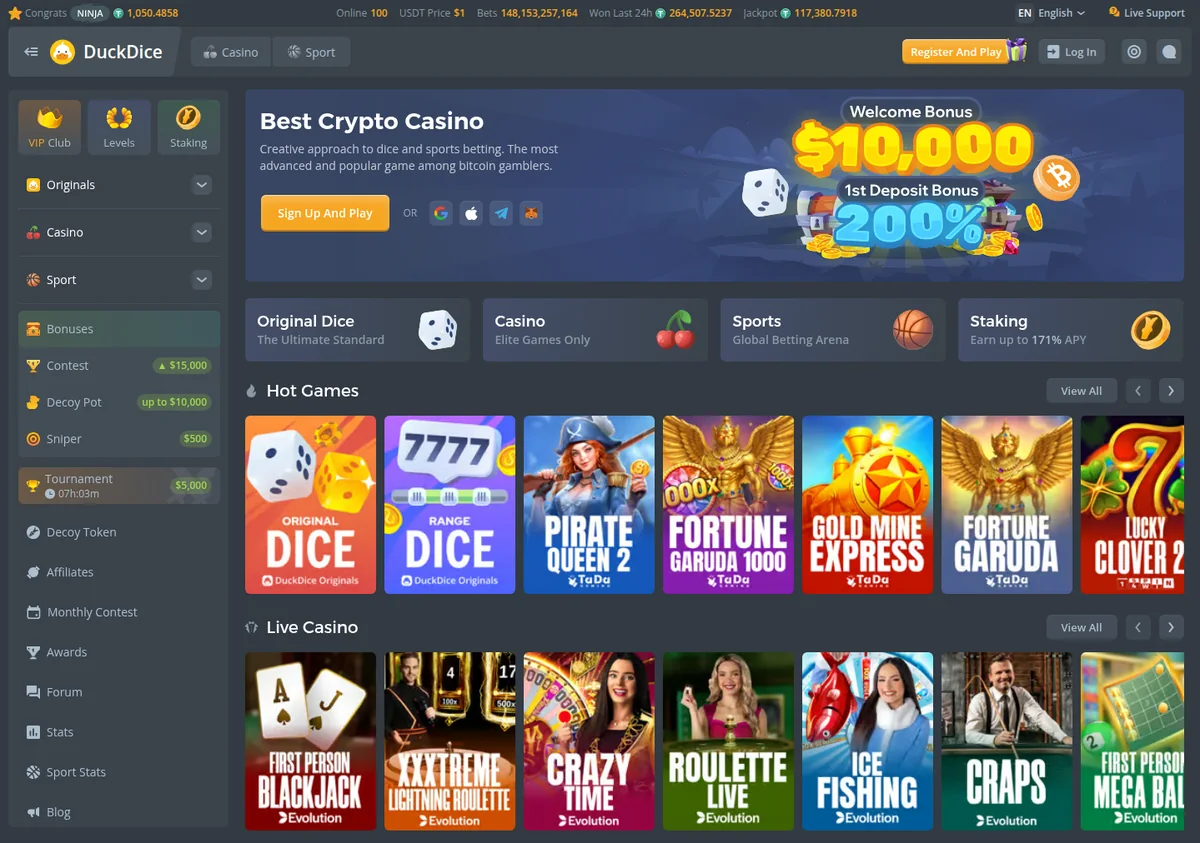
10 coins, and two of them — Dash and Monero — appear almost nowhere else in this register. The cashier is built around dice with a result-checking mechanism of its own, rather than around a slot catalogue bought in from studios.
A screenshot taken from the server on 25 September 2026. The frame shows the page
as it came back — no login and no account.
A cashier built around dice with a result-checking mechanism of its own
rather than around a catalogue bought from studios — an entirely different kind of place from
the other eight entries in this ten. Two coins on its list, Dash and Monero, appear almost
nowhere else in this register. The terms name no verification threshold whatsoever, which
puts this entry at the weakest of the three levels of wording.
The verification clause names players paying in bitcoin outright and asks for a document before the first bet rather than before a withdrawal. Written that plainly, it is a rarity, and for anyone choosing a cashier with bitcoin in mind it is the most important sentence in the terms.
The most interesting sentence of terms in the whole ten and one of the
most important in this register: clause 18.1 names players paying in bitcoin
outright and requires an identity document before the first bet — not before a withdrawal.
For anyone choosing a cashier precisely because they intend to pay in bitcoin, that is
information which changes the decision, and it sits in the terms rather than in marketing
material.
The register entry is legible and the cashier is wide, but the reading dates from the middle of August rather than September — which is why this card loses a point that the more recently read entries keep. The clause separates age confirmation from the identity check, which few sets of terms bother to do.
Row
What was read
Licence number
OGL/2024/1063/0437
Status of the entry
Active
Company in the entry
Kartel B.V.
Coins in the cashier
BTC, ETH, USDT, BCH, TRX, ADA, DOGE, LTC
Verification clause
clause 12.5
Figure inside the clause
no
Welcome bonus
not read
Multiplier and base
not read
Wagering from 500 zł
cannot be calculated
Date read
14 August 2026
A legible entry and a wide cashier, and yet a point below comparable
positions — and the reason lies not with the operator but with us: the reading dates from
mid-August rather than September. Clause 12.5 does something along the way that few
sets of terms attempt: it separates age confirmation from the identity check as two distinct
matters.
One of 3 entries that give the verification threshold as an actual amount — €2,500 or the equivalent in crypto. The cashier would not open from this desk, so the coin list stays empty rather than guessed.
Row
What was read
Licence number
OGL/2023/111/0069
Status of the entry
Active
Company in the entry
Moon Technologies B.V.
Coins in the cashier
cashier not opened
Verification clause
clause 6.6
Figure inside the clause
yes
Welcome bonus
not read
Multiplier and base
not read
Wagering from 500 zł
cannot be calculated
Date read
not read
One of 3 entries in the whole register whose
verification threshold carries an actual amount — €2,500 or the equivalent in crypto.
That is the strongest of the three possible levels of wording and something anyone can hold
an operator to. The cashier would not open from here, so the coin list stays empty: not
guessed, not copied from somebody else's list, simply empty.
A long-standing brand with a recent entry in the register — the company Dama N.V. runs several other addresses in the same family. Everything to do with the cashier and with verification thresholds remains unread here.
Row
What was read
Licence number
OGL/2024/165/0185
Status of the entry
Active
Company in the entry
Dama N.V.
Coins in the cashier
cashier not opened
Verification clause
no clause number
Figure inside the clause
no
Welcome bonus
not read
Multiplier and base
not read
Wagering from 500 zł
cannot be calculated
Date read
not read
A screenshot taken from the server on 25 September 2026. The lettering visible in
the frame is the operator's own material and was not checked here — the frame shows what
the page displays, not that it is true.
A long-standing brand with a recent entry in the register — and at the same
time the lowest card in this ten, because beyond the licence almost nothing could be read.
Two points is not a verdict on the casino; it is a description of the state of knowledge. One
thing from the entry itself is worth noting: the company Dama N.V. runs several other
addresses in the same family, so the licence number here is not tied to a single brand.
The only entry in this register built around poker at a table with other players rather than around a game against a program. That is a different kind of risk and a different kind of verification: at a table, who sits beside you counts too.
Row
What was read
Licence number
ALSI-202412004-FI1
Status of the entry
valid
Company in the entry
Tilia Solutions N.V.
Coins in the cashier
BTC, ETH, USDT, SOL, TRX
Verification clause
no clause number
Figure inside the clause
no
Welcome bonus
not read
Multiplier and base
not read
Wagering from 500 zł
cannot be calculated
Date read
2 September 2026
A screenshot taken from the server on 25 September 2026. The tables visible in the
frame are what the lobby held at the moment of reading.
The only entry built around a table with other players at it rather than
around a game against a program. That changes two things at once: the kind of risk — at a
table you lose to better people, not to a house edge — and the kind of verification, because
the terms mention it also on suspicion that table rules were broken. No money threshold is
given.
Ten entries written out is not ten recommendations. It is ten cards where the most
fields could be read — which is why it is these bitcoin casinos in Poland that anything
beyond a name can be said about.
An empty cell in this table always means “not read”, never “does not exist”.
Two things show up in this table that no single review shows. First: the number of coins
and the quality of the register entry do not travel together — Rakebit has the
widest cashier of the whole forty and does not stand first because of it. Second: the wagering
column is mostly empty, and that is the honestest picture of this trade that can be shown here.
one of 3 entries whose threshold carries a figure rather than a description
No row in this table says “this is the best”. Every row says “this is what was read here” —
and that is the entire content of this comparison.
17
Games at bitcoin casinos in Poland
A catalogue bought from studios, in-house games and live tables
The game catalogue is the part of a casino that looks most alike across the whole trade,
because it comes from the same place. An operator does not make slots — it buys access to the
catalogues of a dozen or so studios. That is why the figure “over 6,000 games” tells one
cashier from another not at all, and why the Exit Card awards it not one point.
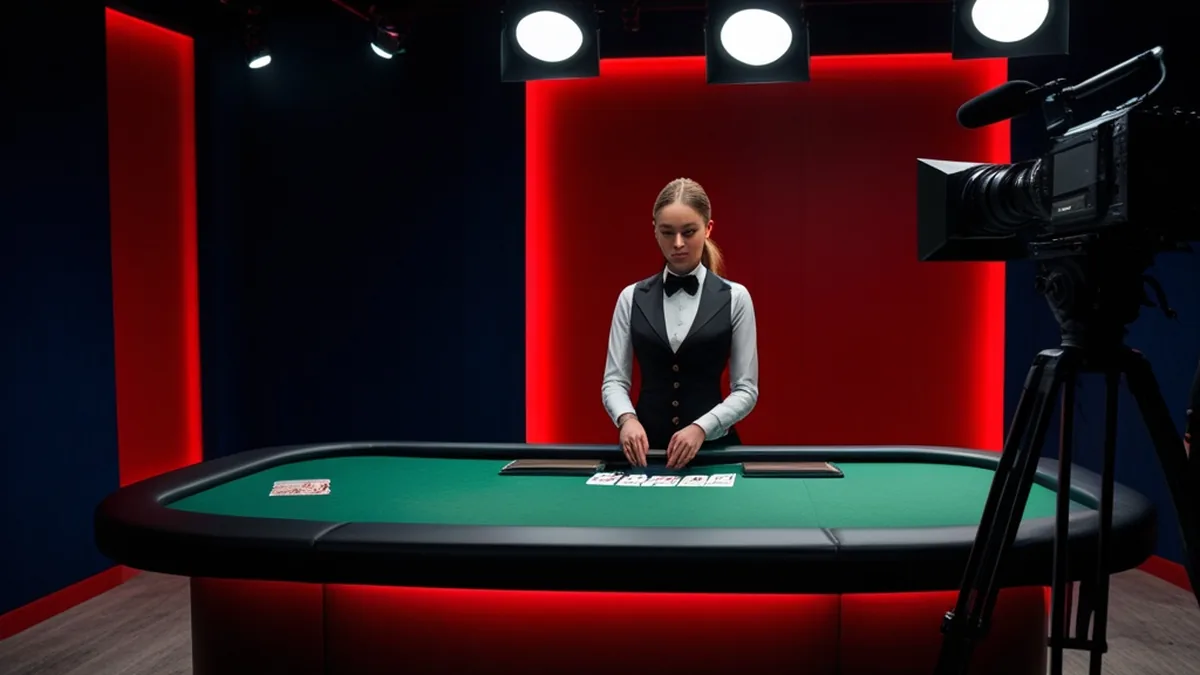
An illustration generated for this page. It is not a frame from any broadcast or any studio
— it shows how a table like that is put together.
Three kinds that genuinely differ
Kind
Who makes it
What is checkable
What is missing
Slots
outside studios
the studio's name, visible in the catalogue
a return percentage without a laboratory report
In-house games
the operator itself
a result-checking mechanism, where there is one
an independent audit, in most cases
Live tables
broadcast studios
the camera picture in real time
any influence by the player on anything beyond their own stake
A “result-checking mechanism” is a function where the game publishes a hash of its result
before the round and the seed after it — which makes it possible to check that the result was
not changed along the way. Some in-house games have it; no slot bought from a studio does.
You will not find one slot return percentage on this page. Not because it does not matter
— because a figure given without a laboratory report has been copied from the supplier's
material or from another list, and the same title is sometimes delivered to operators in several
versions differing in exactly that figure. Giving it without a source is guessing to a hundredth
of a per cent.
Slots — where the catalogue comes from and what can be said
about it without copying somebody else's figures.
Plinko — an in-house game with a result-checking mechanism, the
most searched-for of the three.
Live tables — what the broadcast shows and what it does not.
The game catalogue is the weakest selection criterion there is, and at the same time the
most used. Almost every bitcoin casino in Poland licenses from the same pool of studios,
so the same slot at two operators is the same slot.
18
Identity verification at bitcoin casinos in Poland — where it is written down
7 entries name a clause, 3 put a figure inside it
“A casino without verification” is the most repeated promise in this trade and the least
often kept. Not because operators lie — because terms almost always leave themselves the option
of asking for a document, and only word it differently. The table below shows how differently.
verification follows from €2,500 or the equivalent in crypto.
yes
The last column is the one that matters. “Verification when the operator considers it
necessary” and “verification from €2,500” are two entirely different
commitments written in the same polite tone.
Three levels of wording, strongest first
A threshold given as an amount. “From €2,500 or the equivalent”
— a commitment that can be checked and held to. The rarest.
A moment stated outright. “Before the first withdrawal”, “before the first bet” — no
amount, but a moment at which it will happen.
Discretion. “When the operator considers it necessary”, “at any moment” — the
commonest wording, and in practice it limits nothing.
The practical conclusion for anyone planning a withdrawal: have the document ready in
advance — scanned, legible, with the corners visible — whichever of the three levels applies at
the cashier chosen. Verification done when the money is already waiting takes exactly as long as
verification done earlier, only it happens under pressure. The detail is on the
verification page.
This is the one field worth reading before a deposit rather than after. Among the forty
bitcoin casinos in this register some name a threshold or a deadline in their terms and
some write “at our discretion” — and that is the whole difference between a condition you can
plan around and one you discover.
19
What players argue about at bitcoin casinos
The disputes, taken from public collections of reviews
This block contains not one quotation with a name attached. The reason is simple:
somebody else's post on a review site cannot honestly be attributed here — there is no knowing
whether the account belongs to a player, to an operator, or to someone paid by one of the two.
What can be done honestly is to gather what the disputes are about and which way they run. Below
are four subjects that recur most often in public collections of reviews of crypto cashiers.
Withdrawal timesubject no. 1
quick approvala sudden request for a documentno information about status
The commonest subject and also the most scattered. The same cashier collects reviews about
a withdrawal “in a quarter of an hour” and “after four days” — and the difference almost
always comes not from the network but from whether the request went to a manual check.
The conclusion for anyone planning: the speed of the network transfer itself is
predictable, the speed of approval on the cashier's side is not. There is not one figure
on this page about it, because nobody here has measured any.
Verificationsubject no. 2
done onceasked only at withdrawalrepeated at the next withdrawal
The second commonest cause of frustration, and almost always the same mechanism: the
account opens without a document, and the document appears as a requirement at the first
withdrawal. Formally that matches the terms; to the player it looks like the rules
changing mid-game.
That is why every entry in this register carries the clause of the terms that says so.
Reading one sentence before depositing removes the whole dispute.
Bonuses and wageringsubject no. 3
a high percentagecancellation over a stake limitwagering on deposit plus bonus
Complaints rarely concern the size of the wagering. They concern three things written in
small print: the limit on a single stake while clearing, the weighting of games, and the
base the multiplier runs on.
It is the only one of these four categories that can be checked in full before depositing
— everything disputed in it stands in the bonus terms.
Support and disputessubject no. 4
round-the-clock chattemplated answersno route of appeal
The thread where a real problem is hardest to tell from ordinary disappointment at losing.
One thing does recur: players rarely know where to go when a conversation with support
ends in nothing.
The address of the regulator that issued the licence is the answer to that question — and
that is why the licence number together with the status of the entry stands first in this
register, ahead of everything else.
Four subjects gathered from public collections of reviews of crypto cashiers. There are no
quotations and no names, because the authorship of a single review on a site like that cannot
be confirmed. What is here is what can be confirmed: what the dispute is about.
One remark about review sites themselves. The spread of scores in this trade tends to be
bipolar — plenty of fives, plenty of ones, little in the middle — and that is no accident: a
review is written after a win or after a problem, rarely after an ordinary session. The average
of a spread like that says less than a list of the subjects under dispute.
20
A glossary — twelve terms that decide the sum
In plain words and without ornament
Term
What it really means
Wagering
The total of bets required before a bonus can be withdrawn. Without the multiplier base the figure on its own means nothing.
Multiplier base
The amount the wagering multiplies: the bonus alone, or the deposit together with the bonus. The difference is twofold.
Game weighting
What percentage of a stake counts towards wagering in a given game. Slots usually 100%, tables 10% or nothing.
Stake limit during wagering
The upper bound on a single bet while a bonus is being cleared. Going over it can be grounds for cancellation.
Network (chain)
The track a transfer runs on. The same coin runs on several networks; sending over one other than the one given means losing the transfer.
Confirmation
The transfer being written into a further block. A cashier credits a deposit after a set number of confirmations, not at once.
Network fee
A cost charged by the network, not by the casino. It depends on how busy the network is, not on the size of the transfer.
Fixed-value coin
A cryptocurrency tied to the rate of a traditional currency — USDT, USDC, DAI. The balance does not move of its own accord.
Result-checking mechanism
A function where the game publishes a hash of the result before the round and the seed after it. Some in-house games have it.
KYC
Identity verification. On this page always with the clause of the terms that requires it.
Entry in a register
A licence number found in the regulator's own search, together with the status and the company name. Not the same as an operator's declaration.
The Exit Card
The measure of this page: five fields worth two points each. It measures how much of the road out is written down before a deposit, not the quality of a casino.
The glossary is not here for decoration: half of the confusion around the phrase
bitcoin casinos in Poland comes from twelve terms that mean something different on
a poster and in a set of terms. A network is not a coin, a licence is not a permit, and wagering is
not the size of the bonus.
21
How this register is made and what will never be in it
The method in six sentences
A licence number is checked in the regulator's register, not in the operator's footer.
If the search returns an entry, the number, the status and the company name are noted. If it
does not, the entry gets the label “declared”.
The verification clause is read in the terms and written down with its clause number.
If there is a figure inside — a money threshold or a deadline in days — that is written down
too.
The coin list is read in the cashier, opened from this desk, and not on the operator's
marketing page.
Bonus conditions are calculated only when all three figures are known. One missing
means “cannot be calculated”, not “roughly this much”.
Every reading gets a date, and that date visibly ages: after a month the entry loses a
point in the “Reading” field.
Withdrawal times are absent and will stay absent until somebody deposits their own
money and counts the hours with a watch. Until then the column stands empty.
The full description of the measure, together with what it does not measure and why,
stands on the method page. All forty entries with cards of their own
are in the register.
The best crypto casino in Poland in 2026The first entry in this comparison: the only one whose licence number, status, company name
and cashier contents were all read on the same day.
What players in Poland are looking for — the searches broken down
Eight wordings of the same need, and what each one really means
People type the same question in eight different ways, and each of them expects a
slightly different answer. Below are the eight commonest wordings together with what really
lies behind each one — because some of them are not about a casino at all, but about an
exchange or a payment rail.
How it is usually worded
What the question is really about
Where on this site
bitcoin casino Poland
a list of cashiers that will take a Polish player and their coins
Four of these eight questions are settled not at the casino but earlier — at the exchange and
in the choice of rail. That is why the road a złoty takes occupies as much room on this site
as the register itself.
Two terms that travel in pairs in Polish searches are worth separating here. A
bitcoin casino in Poland is a cashier whose balance is kept in crypto. A crypto
casino is exactly the same thing, only wider — because bitcoin is one of the
27 coins counted in this register rather than the only one. The difference
is purely one of naming and does not point to two different kinds of place.
The cashier that speaks Polish
Of the 40 brands in this register, 1 answers in Polish:
Shuffle. Checked against the
/pl/ address and against the list of account currencies, not against a flag
in the footer — a flag is sometimes decoration, and a translated home page does not mean
support will write back in Polish.
Why record it at all. Because language matters at exactly one moment — a disputed
withdrawal. A conversation about why a request has been sitting for three days, held in your own
language, is a different conversation from one held in English through a browser translator. At
every other moment the language of the interface is beside the point, because the “spin” button
does the same thing whatever it is called.
Breaking the searches down shows something no list will admit: the phrase bitcoin
casino Poland is searched far less often than individual games and than payment methods on
their own. Anyone describing a flood of Polish traffic to crypto casinos is describing something
else.
23
Seven questions worth asking about a bitcoin casino in Poland before the first deposit
Every answer sits in documents, not in reviews
This is the whole checklist of this page, arranged in the order it makes sense to work
through. Working through it takes a quarter of an hour and requires opening no account — all
seven answers are public before anyone hands over an email address.
01
Does the licence number turn up in the register?Not “is there a licence” — does the
number typed into the regulator's search return an entry. Those are two different things,
and in this register they differ by about half: 22 entries of 40 return a
result.
02
What is the status of that entry and who is it issued to?An entry has a status and a
company name. The company is sometimes different from the brand and sometimes the same for
several brands at once — that is not a fault, it is information about who you are actually
dealing with.
03
Which clause of the terms governs verification?And is there a figure inside it: a money
threshold or a deadline in days. Wording without a figure limits nothing. In this register
3 entries have one.
04
Which coins does the cashier take, and on which networks?The list in the cashier is
sometimes shorter than the list in the marketing. The network matters more than the coin —
it is on the network that transfers go missing.
05
From what amount does the cashier accept a deposit at all?The minimum is sometimes
higher than intuition suggests, and a transfer below it can go uncredited.
06
What does the wagering multiplier run on?If you are taking a bonus. On the bonus alone
or on the deposit together with the bonus — the difference is twofold and it sits in the
bonus terms, not in the headline of the offer.
07
When was this information read?This applies to every comparison, including this one.
Terms change without notice, and a list with no reading date is a list of unknown age.
Seven questions, a quarter of an hour, forty entries. That is the whole effort choosing
a bitcoin casino in Poland takes — and at the same time the effort most comparisons do
not go to, because it cannot be shortened or shown in a table cell.
24
Ten mistakes at the first deposit
Nine of them happen before the casino is even opened
Sending a coin over the wrong network. The dearest and the commonest. The same coin
runs on several networks; the cashier gives an address for one. A transfer sent over another
does not arrive and usually does not come back.
Typing an address out from a shortened preview. Cashiers show the beginning and the
end of an address. The middle has to be copied whole — with the button or the QR code.
A deposit below the minimum. The transfer goes out and the balance does not change.
Recovering that amount means a conversation with support and is sometimes impossible.
Several small deposits instead of one. The network fee does not depend on the amount,
so five deposits of two hundred złoty cost five times what one deposit of a thousand costs.
Opening the exchange account at the last minute. Verification is often the longest
step on the whole road, and it is done once. Done earlier it costs nothing.
Taking a bonus without checking the multiplier base. Two offers described identically
can differ twofold in the turnover required.
Going over the stake limit while clearing wagering. A single breach can be grounds for
cancelling the bonus along with the win.
Clearing wagering at the tables. Tables usually count at ten per cent or not at all.
The same turnover then requires ten times the total in stakes.
Not keeping the transaction identifier. It is the only proof the transfer went out,
and the first thing support will ask for.
Depositing an amount whose loss changes something. The only mistake on this list that
no technical knowledge repairs.
Note the proportion: nine of these ten mistakes are made outside the casino — at the
exchange, in the wallet, or in the reading of the terms. The casino is the last place on this
road, not the first, and that is the practical reason this page gives the road the money takes
as much room as the cashiers themselves.
25
What the whole road actually costs
Broken down on a thousand złoty — structure, not rates
The breakdown below gives the rates of no particular exchange. Rates differ between
platforms and change over time, and a copied rate goes stale faster than anything else. It gives
something more durable instead: where exactly on the road a cost appears, who charges it, and
what can be done about it.
Place
Who charges
What it depends on
What can be done
1. Paying into the exchange
the exchange or a payment provider
on the rail: a transfer is usually cheaper than a card
choose a cheaper rail
2. Changing PLN → crypto
the exchange
the charge plus the spread
one larger change instead of several
3. The transfer to the cashier
the network
the network and how busy it is, not the amount
choose a cheaper network
4. The play
the cashier
the house edge, built into the game
nothing
5. Withdrawing from the cashier
the network, sometimes the cashier
the minimum and the cashier's own fee
withdraw less often, in larger amounts
6. Changing crypto → PLN
the exchange
the same two components as on the way in
one larger change
7. The transfer to an account
the exchange
limits and the withdrawal method
partly
Four of the seven places can genuinely be made cheaper, and all four come down to the same
rule: fewer transactions, larger amounts. The fifth place — the house edge — cannot be made
cheaper by anything.
The one optimisation that always works
The network cost does not depend on the size of the transfer. A transfer of a hundred
złoty and one of a thousand cost the network the same. One thing follows that is worth keeping
whole: on small amounts a fixed cost eats a percentage that is invisible on larger ones. This is
not an encouragement to deposit more — it is an argument against breaking up what has been
planned anyway.
Nine of those ten mistakes happen outside the casino — at the exchange, on the network,
or in your own head. That is the strongest argument for thinking of bitcoin casinos in
Poland as the last stretch of the route rather than its beginning.
26
Account and wallet security
Five things you do once that work everywhere
This section concerns casinos no more than anything else online — but it concerns them in
a particularly expensive way, because a crypto transfer is irreversible in both directions.
Losing access to a wallet has no appeals procedure and no helpline.
Two-factor login wherever it is available — at the exchange, in the wallet and in the
cashier. An app that generates codes is safer than a code in a text message, because a phone
number can be taken over and an app cannot.
The wallet recovery phrase written down away from the computer. Not in a notes app,
not in a photograph, not in a message to yourself. Whoever holds the phrase holds the wallet
— and that is the whole rule.
The cashier address checked at every deposit. Addresses are sometimes generated
afresh. Pasting last month's address is sometimes a transfer to nowhere.
A separate password for each of the three things — the exchange, the wallet and the
cashier. A leak in one place then has no sequel.
Distrust of messages about a bonus. The commonest attempt at fraud in this trade looks
like a message from a casino about an “unclaimed prize” with a link to a login page. A casino
does not ask for a password or a wallet phrase — never, on any channel.
One distinction is worth adding, because this trade tends to blur it. The wallet in a
casino cashier is not your wallet — it is a balance on somebody else's server, written into
somebody else's database. Your own wallet is the one you hold a recovery phrase for. Whatever
stays in the cashier when a session ends stays with the operator, not with you.
The security of an account does not depend on which bitcoin casino in Poland you
choose, but on what you do with your password, your second factor and your wallet address. None
of the forty will repair a mistake made at the exchange.
27
Cashier profiles — they do not all do the same thing
Counted from the 40 entries in the register
Comparisons of crypto cashiers usually treat them as one species. They are not one
species: some are built around a slot catalogue, some around in-house games, some around sports
betting, and one around a poker table. The difference is practical, because it decides what a
given place simply does not have.
Profile
How many entries
What the core is
What is sometimes missing
Slots
35
a catalogue bought from a dozen or so studios
in-house games with a result-checking mechanism
In-house games
19
dice, crash and Plinko written by the operator
a wide slot catalogue
Live tables
18
broadcasts from studios
a result-checking mechanism — at a table the proof is the picture
Sports betting
23
odds on events, on the same balance
nothing — usually added to the casino rather than instead of it
Poker at a table
1
play against other players
the house edge as the main mechanism — here the opponents are people
The figures are counted from the profile field on each of the 40 entries. They add up to
more than 40, because most cashiers carry two or three profiles at once.
Sports betting on the same balance
23 of the 40 entries run betting alongside the casino. From the cashier's
point of view that changes nothing — the balance is shared and there is one deposit. It does
change two things in the small print, and both are worth checking before using it: bets usually
do not count towards casino bonus wagering, and a betting bonus is often a separate offer with
its own multiplier and its own deadline.
28
The register in figures
What these forty entries say once they are counted together
The comparison means something as a whole and not only as a list. Below is what comes out
of counting all 40 entries at once — a picture of the trade seen through one consistently
applied measure.
55%of entries carry a number in a register22 of 40
18%name a verification clause7 of 40
8%carry a figure inside the clause3 of 40
10%publish the full set of bonus figures4 of 40
27different coins in the cashierscounted in 23 cashiers
57%with the cashier read23 of 40
The most interesting thing is the gap between the second figure and the third. A
verification clause is named by 7 entries — that is, by most of those whose
terms could be read at all. An actual figure inside that clause is carried by only
3. That, in one sentence, is the whole difference between a commitment and a
polite statement: both are written in the same tone, but only the first can be invoked.
Of the forty brands in this comparison, 22 carry a licence number found in the regulator's own search together with the status of the entry and the company named in it, while 18 carry only a jurisdiction declared by the operator. The label beside every entry says which of the two it is.
What follows for someone choosing
Half the market cannot be checked in a register — which does not mean it is bad, only that
if something is disputed there is no knowing who to write to.
A bonus that cannot be calculated is an offer of unknown price. Most of the ones here are.
The basket of coins is wide almost everywhere, so it is a poor criterion for choosing — the
exception being fixed-value coins, which are not in every cashier.
The reading date is the only figure that ages on its own and has to be renewed. That is why
it is one of the five fields of the measure, rather than a footnote at the bottom.
The register in figures is the shortest answer to the question of what this page measures
at all. The best bitcoin casinos in Poland in this comparison are simply those about which
the most checkable fields were recorded — and nothing beyond that is promised here.
29
How to read a set of terms in a quarter of an hour
Four places that hold everything that counts
A casino's terms usually run to several dozen pages and nobody reads them whole —
including the people who write about casinos. The good news is that everything which changes a
decision sits in four places, and they can be found with the browser's own search.
01
Search for “verification” or “KYC”That finds the verification clause. Write down its
number and check whether there is a figure inside it — a money threshold or a deadline.
02
Search for “wagering” or “bonus amount”That finds the wagering multiplier base. It is
the figure by which two identically described offers differ twofold.
03
Search for “maximum bet” or “max stake”That finds the stake limit while wagering is
being cleared. Going over it can be grounds for cancelling the bonus.
04
Search for “dormant” or “inactive account”That finds the rule on unused accounts. Some
sets of terms provide for a fee or for the balance lapsing after a period without logging in
— and it is a clause almost nobody knows about until it applies to them.
Four searches, a quarter of an hour. For comparison: reading a whole set of terms takes
about two hours, and 95% of it concerns matters that will never arise. This page does exactly
the same for 7 entries and records the result together with the clause number —
so that anyone can check whether the right thing was read.
30
When not to play
The section comparison sites leave out, which is why it is here
Everything above is about how to choose. This section is about when not to choose at all
— and it is the most important part of this text, even though it contains not one figure from
the register.
When the amount matters. If losing it changes anything about the month, it is the
wrong amount however well a casino did in any comparison.
When the previous session ended in a loss and the urge is to win it back. Chasing is
the one behaviour that turns entertainment into a problem faster than anything else, and it
has nothing whatsoever to do with the choice of casino.
When the money is borrowed — in any form at all, including an overdraft and a credit
card.
When playing has stopped being a decision. If a session begins without anyone deciding
it will, the choice of casino has stopped being the subject.
The helpline on 801 199 990 runs round the clock, is free and is anonymous. Limit
tools — daily, weekly, on losses and on session time — are in the account settings of
practically every cashier in this register, and they work best set before a session rather than
during one. More on the safer play page.
31
Transfer networks — the glossary that saves the most money
One coin, four different tracks
The dearest mistake on the road from a Polish account to a cashier concerns neither the
casino nor the coin. It concerns the network. A fixed-value coin runs on several networks at
once, differing in fee, in confirmation time and — most importantly — in address format. The
cashier gives an address for one particular network, and a transfer sent over another never
reaches it.
The name you will see
Whose network it is
What it carries
What sets it apart
ERC-20 / Ethereum
Ethereum
ether and fixed-value coins
the most widely supported; the fee varies and can be high
TRC-20 / Tron
Tron
mostly fixed-value coins
a low and predictable fee, hence its popularity for deposits
BEP-20
BNB Chain
a wide set of coins
cheap, but not supported everywhere
Lightning
a layer on top of Bitcoin
bitcoin only
settlement almost instant, but both sides have to support it
Bitcoin main network
Bitcoin
bitcoin only
the most widespread; confirmations slower than the rest
The network name stands in the cashier beside the address and beside the selector at the
exchange. If the two do not match, the transfer will not arrive — and that is not something
casino support settles.
Three rules that are enough
Network first, address second. An address without a network means nothing — the same
string of characters is sometimes valid on two networks, and only one of them has anything to
receive it.
The same network at withdrawal. A withdrawal has to run on a network that both the
cashier and the destination address support. Simplest: the one the deposit arrived on.
A small test transfer the first time. It costs one network fee and is the cheapest
possible insurance against a mistake that cannot be undone.
Of the 27 coins counted in the 23 cashiers of this
register, the widest choice of network belongs to the fixed-value coins — and that is their
second advantage beside the obvious one. Bitcoin has two roads in practice: the main network and
Lightning, where the cashier supports it. A narrower choice means fewer places to go wrong, so it
is not a fault.
A crypto deposit is decided by three things at once: the network, the address and the fee. The cashier gives an address for one particular network, so the same coin sent over another one does not arrive — and that is not something casino support can put right.
The transfer network is the only place on this route where a mistake costs the whole
amount rather than a fraction of it. That is why on the card of every bitcoin casino the
coin list stands together with the networks, not instead of them.
32
In-house games — dice, crash and Plinko
The only category where the result of a single round can be checked
In-house games are the part of the offer an operator did not buy from a studio but wrote
itself. At crypto cashiers there are usually three, and all three are simpler than any slot —
which is their advantage, because simplicity is what makes the result checkable.
Game
What it is
What the player sets
What cannot be set
Dice
a drawn number lands above or below a threshold
the threshold and the direction of the bet
the probability — as the payout rises the chance falls
Crash
a multiplier rises until it breaks off at a random moment
the moment of cashing out, and the stake
the moment it breaks — that is drawn before the round
Plinko
a ball falls through a grid of pegs into a bucket with a multiplier
the number of rows and the risk level
the path of the ball
In all three the settings shift the spread of payouts, not the expected result. A higher
possible win always means a smaller chance of it, and the other way round.
The result-checking mechanism — what it proves and what it does not
Some in-house games offer a function where a hash of the result is published before the
round and the seed that reproduces that hash is published after it. Anyone who wants to can check
after the session that the result was settled before the bet was placed, not after. It is a real
safeguard and worth knowing about — but it is also worth knowing what it does not do.
It proves: that a single round was not changed after the bet was accepted.
It does not prove: that the game is favourable. The house edge sits in the payout
table, not in the draw, and it is out in the open.
It does not apply to: slots bought from studios — there the equivalent is a laboratory
certificate issued to the supplier of the game, not a function in the interface.
It does not apply to: live tables — there the proof is the camera picture.
In-house games are the one thing an ordinary online casino does not have. In practice
that means a bitcoin casino in Poland offers a round whose result can be checked after
the fact — which does not make it more favourable, only checkable.
33
How to spot a list copied from another list
Six signs visible without any tools at all
Most comparisons of crypto cashiers come into being by copying the previous comparison.
That is not a moral charge but an observation about the age of the data: a list copied from a
list a year old gives the position of a year ago, however recently it was published. Below are
six identifying marks — they work on this page too.
Withdrawal times with no date of measurement. “Paid out in under 10 minutes”, with no
word on who measured it, when, or with what amount, has been copied. A measurement has a date
and an amount, or it never happened.
Return percentages given to a hundredth. The same title is sometimes delivered to
operators in several versions. A figure with no laboratory report named is somebody else's
figure.
“Curaçao licence” with no number. A jurisdiction with no number and no status of entry
is the operator's declaration, not a check. A number can be typed into a search; a name
cannot.
Scores with a decimal beside every position. “9.2 · 9.1 · 8.9” down consecutive rows
is usually a device for keeping two brands from coming out the same, not the result of a
measurement.
Reviews with names and dates but no source. A signed quotation that cannot be found
again is the cheapest thing to produce in this entire trade.
No update date, or a date in the header with no change in the text. The year in a
title changes with one command; readings do not.
This page tries to pass its own test. Licence numbers stand beside the entries together
with the status and the company name — 22 of 40. There are no withdrawal
times at all. There are no return percentages at all. Reviews are gathered as subjects of dispute,
without a single signed quotation. Scores are whole numbers out of ten and they repeat, because
they are meant to repeat. And beside every reading stands a date that ages on its own. The full
list of what is deliberately absent stands on the about page.
The five fields of the Exit Card and how many of the forty entries score both points in each. The biggest hole is wagering: the three figures the sum needs are published by a handful of operators; the rest give the percentage alone.
The test is simple and works on any comparison of bitcoin casinos in Poland, not
only on other people's: check whether any field carries a date. A list without dates is a list
that fails to age only because nobody recorded when it was true.
34
What changes in this register, and how often
Four things that go stale at four different speeds
The register is not a finished document and does not pretend to be one. Below are four
kinds of data together with how quickly each loses its validity — because that is information
almost no comparison gives about itself.
What
How quickly it goes stale
How that is known
What we then do
The status of a register entry
from one day to the next
entries are sometimes suspended or revoked without notice
read it again and change the date
The verification clause
months
terms are updated quietly and the clause numbering shifts
read the clause again, not only the wording
The coin list in the cashier
weeks
coins are added and removed without announcements
open the cashier again
Bonus conditions
weeks
welcome offers change most often
read the three figures again, or strike the sum out
That is why the fifth field of the measure measures us and not the operator: a month after
the reading, an entry loses a point. A comparison that judges somebody else's terms while
saying nothing about when it read them is judging from memory.
There is one practical consequence for the reader. The licence number and the status of
the entry are worth checking yourself before a deposit — it takes a minute, and it is the one
thing on this page that can change between publication and reading. Everything else ages more
slowly, and in a way the reading date beside the entry makes visible.
The current position: 40 brands, 22 numbers found in registers,
23 cashiers opened and read, 4 bonuses with the full set of figures
that makes the wagering sum possible, and 27 different coins. Every one of
those figures carries a reading date beside it, and every one can be recounted from the cards of
the register.
Four things change an entry, and all four are external — none of them is anybody's
opinion of a brand. That is what separates a register of bitcoin casinos in Poland from a
ranking: a ranking changes when somebody changes their mind, a register when a document changes.
35
A first session at a bitcoin casino in Poland, step by step
From deciding the amount to the withdrawal, with nothing skipped
Everything above takes the road apart. This section puts it back together into one
sequence — the one it really looks like on a first attempt, together with the places where people
usually get stuck. We assume the exchange account does not exist yet, because that is the longest
of the possible versions.
01
Settle the amount before opening anythingNot the amount of the deposit — the amount whose
loss changes nothing about the month. It is the one decision on this list that cannot be
corrected later, and the only one with nothing to do with technique.
02
Open and verify an exchange accountHere the first request for a document appears.
Verification is often the longest single step and it is done once — done now it costs
nothing, done at withdrawal it costs nerves.
03
Pay in złoty by one of the six railsTransfer, BLIK, card, Revolut or paysafecard —
depending on what the exchange accepts. Remember that two of them have no return road.
04
Change it into a coin the cashier takesCheck the coin list in the cashier before
the change, not after. Changing one coin into another is a second charge, avoidable with
one minute of checking.
05
Choose the cashier and check four thingsThe licence number in the register, the clause of
the terms on verification, the coin list and the minimum deposit. All four are public and
take a quarter of an hour.
06
Make a small test transferThe first time — always. One network fee is the cheapest
possible insurance against a network mistake that cannot be undone.
07
Send the rest and save the transaction identifierIt is the only proof the transfer went
out. Save it outside the browser.
08
Decide about the bonus deliberatelyIf you take one, check the multiplier base, the stake
limit and the game weighting. If you do not, the balance is yours at once and without
conditions. Both answers are good; only the third — taking a bonus without reading — is
bad.
09
Set the limits before playingA daily deposit limit and a session time limit are in the
account settings. Set before a session they work; set during one they are a formality.
10
Withdraw on the same networkAddress and network as at the deposit. A second request for a
document can appear here — if the exchange account has been verified since step two, it will
hold nothing up.
The whole road has ten steps, of which only two happen at the casino. The other eight are
the exchange, the network, documents and your own decisions. That is the best argument for
starting the choice of a bitcoin casino in Poland not from a list of names but from the
question of whether this road makes sense for you at all — and only then looking at which cashier
has the most written down before the deposit.
The entry in first place in the registerA licence number with its status, a clause of the terms with a deadline, and a cashier whose
coin list was read on the same day.
Who issued the licence of a casino on this list, and how can that be checked?
Beside every entry stands the name of the regulator, and beside 22 of
the 40 also the licence number, the status of the entry and the name of the company
— all of it found in the regulator's own search. The number can be typed into that
same search and checked in a minute; it is the one thing on this page that can change
from one day to the next.
What is the difference between a bitcoin casino and an ordinary online casino?
The difference sits in the cashier and nowhere else: the balance is kept in crypto, so
a złoty has to turn into a coin first — at an exchange or a bureau — and only travels
on from there. The games, the stakes and the rules work exactly as they do anywhere.
Does a bitcoin casino require verification?
Almost always, only at a different moment than people expect. The first request for a
document comes from the exchange, before a player has touched the casino at all. On
the casino side: of 40 entries, 7 name a clause of the terms that
governs verification, and 3 put an actual figure inside it — a money
threshold or a deadline.
How do you deposit into a crypto casino from Poland?
Three steps: a złoty leaves the account by one of six rails (transfer, BLIK, card,
Revolut, paysafecard), turns into crypto at an exchange, and goes on from there to the
cashier as a network transfer. The commonest mistake on that road is sending a coin
over a network the cashier does not use — such a transfer never arrives.
Can you deposit with BLIK at a bitcoin casino?
Not directly. BLIK reaches as far as the exchange, if that exchange accepts it; the
casino cashier takes a network transfer, not a code from a banking app. BLIK also has
no return road — winnings come back by transfer, never as a code.
How long does a withdrawal from a bitcoin casino take?
There is not one such figure on this site, and that is a decision rather than an
oversight. Measuring a withdrawal means depositing your own money and counting the
hours with a watch. Nobody here has done that, so the column stands empty.
Which casino on this list speaks Polish?
One of the forty: Shuffle.
Checked against the /pl/ address and against the list of account currencies. The rest
answer in English, which matters in practice when a withdrawal is disputed.
What does 40× wagering mean, and why is it sometimes twice as dear?
The wagering multiplier runs either on the bonus alone or on the deposit together with
the bonus. At the same percentage and the same multiplier, the second base means twice
the turnover. That base is the figure almost nobody prints in the headline — in this
register 4 of 40 entries publish it.
Bitcoin or USDT — which is better to deposit with?
A fixed-value coin (USDT, USDC, DAI) does not change value between leaving and landing,
or between sessions. Bitcoin does. That is the only practical difference, and the
answer depends on whether a moving balance is meant to be part of the game.
Where does the data in this register come from?
Licence numbers from the regulators' own searches. Verification clauses from operators'
terms, with the clause number written down. Coin lists from cashiers opened from this
desk. Bonus conditions from wherever operators publish them. Every reading carries a
date and loses a point after a month.